

Events
March 7 from 4–8 PM: Join Biostasis Pacific Northwest on March 7 from 4–8 PM in Seattle, WA for an evening featuring a presentation and social activities. The Cryonics Monitoring group, led by Nikki Olson, will present “Advancing Reliability in Cryonics Monitoring.” The session will include a live demonstration of their custom smart ring technology, as well as insights drawn from years of specialized research and development in cryonics monitoring systems. This is the first public update on the custom smart ring project in over 2 years.
March 13-14: Biostasis Technologies training weekend in NYC (advanced topics and new equipment demonstrations). Invitation-only for March 13 and general case work training on March 14.
April 24-25: Training and first response event in Portland, Oregon. The April 25 event is open to the general public and aims to educate local volunteers about the role they can play in case work.
Projects & activities
The Liquid Ventilation prototype (LV5B) is expected to be completed soon. Upon completion, the unit will be tested in live SST cases.
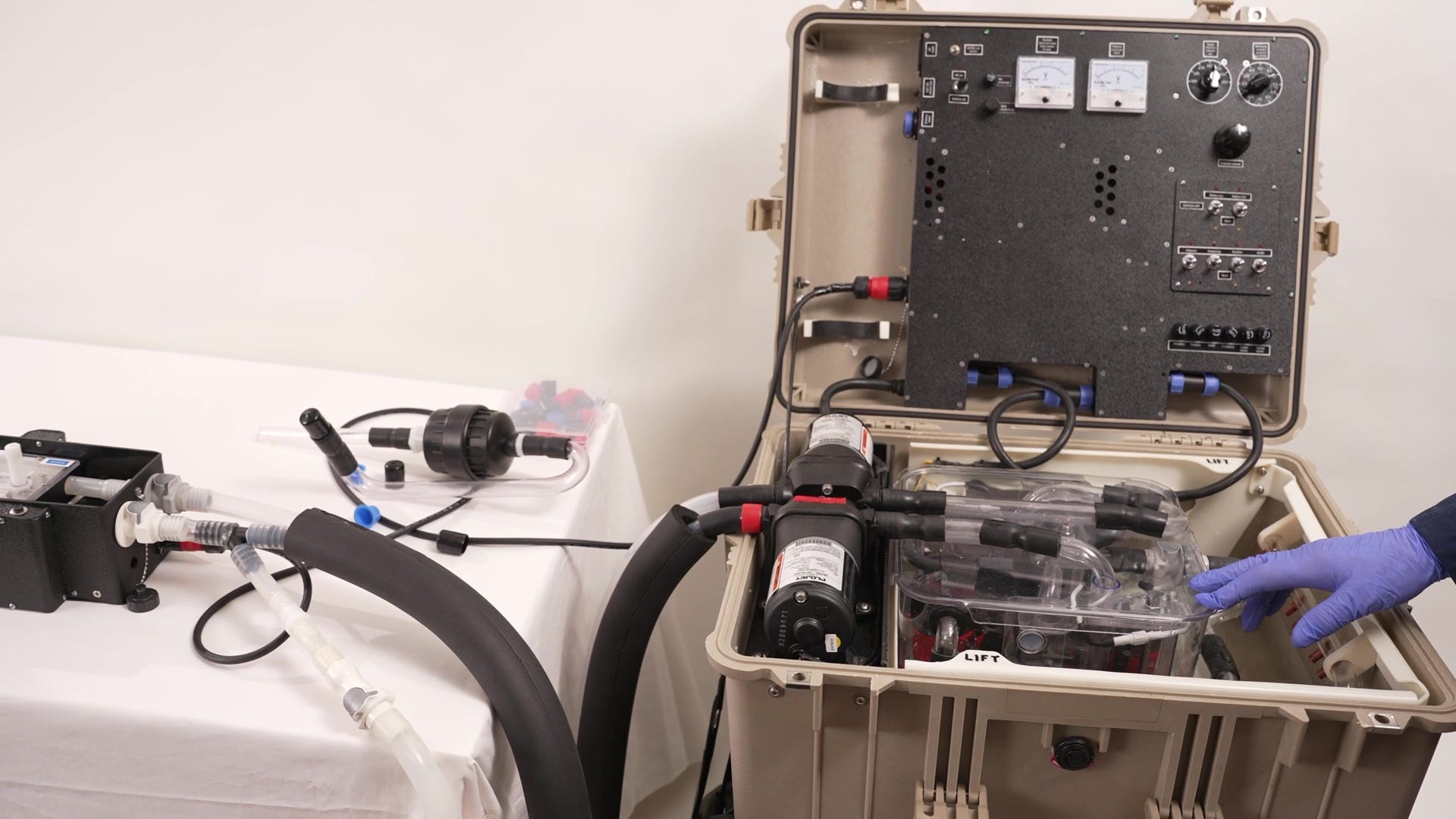
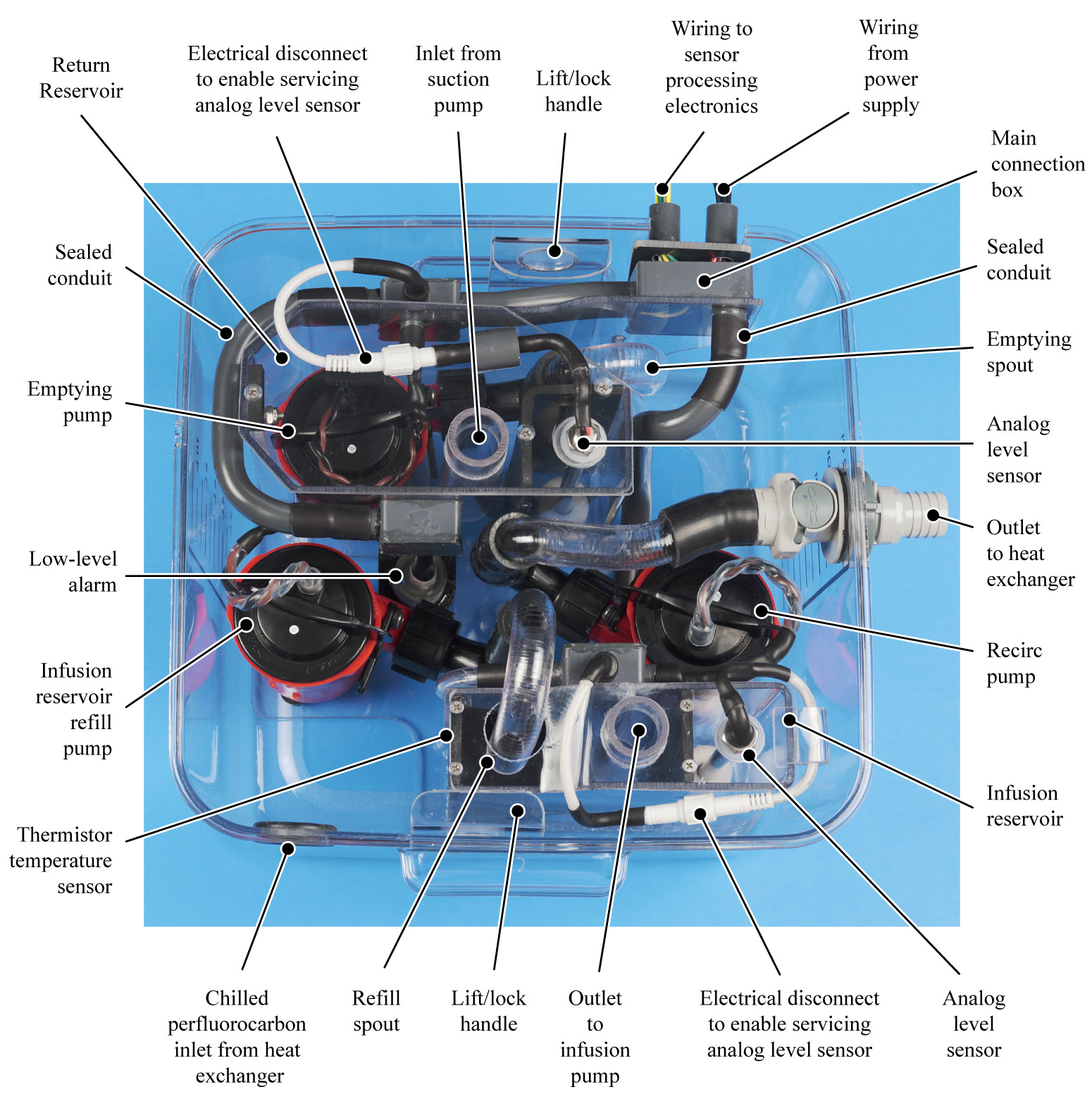
Remote telemetry system design in emergency vehicle. This system (from Florida) is to be installed in New York in March after validation. This system is portable and suited for use in emergency vehicles. It is a standardized system designed by Tomorrow Biostasis and assembled by our sister organization, RBS.
Soon we will be mixing and distributing perfusate to new staging sites including in Texas, Indianapolis, and an updated set of perfusate in Portland. Logistics being set up and access control determined.
Biostasis book: Max More finished writing his book, BIOSTASIS: How Tomorrow’s Technology Could Save Your Life last year, then created a book proposal and is currently sending out inquiries to literary agents.
Proof of human brain ultrastructure preservation in real world conditions
Demonstrable success in preservation of identity-critical fine brain structure is crucial. If we cannot show that existing methods can truly preserve brain ultrastructure, we would have to give up current efforts or try alternative approaches. (We should be trying alternative approaches anyway, in case they could be more effective in some cases.) A new paper – based on work done a decade ago – provides strongly encouraging results.
Progress in cryopreservation has continued over the last quarter century. And yet, the last truly major advance was the introduction of vitrification. Relatively few resources have been devoted to furthering the application of vitrification to human brains. Progress has been made in vitrifying mammalian organs and neural tissue from various species. But direct evidence from vitrified human brains has been sparse. Some CT scans have been done but the results show only the degree of success in perfusing the brain with cryoprotectant. They do not demonstrate preservation of brain ultrastructure.
Excellent brain ultrastructure preservation has been shown using aldehyde-stabilized cryopreservation – a combination of chemical and cryopreservation – in laboratory conditions. However, this is not the currently dominant preservation method nor has it been used in real world conditions. A new paper fills this gap.
Dr. Stephen Coles, a long-time life extension advocate, made special arrangements with the Alcor Life Extension Foundation to be cryopreserved while allowing brain samples to be taken. This case was unusual in that Dr. Coles’ brain was removed from his skull and samples analyzed through tissue biopsy and examination for ice formation and cracking using differential scanning calorimetry (DSC) and high-performance liquid chromatography (HPLC).
Dr. Stephen Coles, Alcor member A-2786, was pronounced legally dead on the morning of Wednesday December 3, 2014 in Scottsdale, AZ at the age of 73. Coles, an unusual brain-only patient, was cryopreserved the same day, becoming Alcor’s 131st patient. As Alcor’s CEO at the time, I coordinate with Dr. Gregory Fahy and others to execute this unique case involving new and unfamiliar procedures. Coles was declared legally dead at 9:50am on December 3, 2014. Stabilization and cooling was performed on-site prior to a short drive to Alcor. Perfusion was completed at 4:05 pm. At 5:32 pm, biopsy samples were extracted from three locations on each side of the midline of the brain. Cool down was initiated at 5:50 pm.
Years later, we finally have a published paper conveying the results of this case (along with other related vitrification results): “Ultrastructural and Histological Cryopreservation of Mammalian Brains by Vitrification” by Gregory Fahy, Ralf Spindler, Brian Wowk, et al. The authors state that: “our observation that human brain cerebral cortical histology and ultrastructure was uniformly preserved despite two days of prior agonal hypotensive hypoxia and three hours of post cardiac arrest cold preservation provides the first direct evidence that human cryopreservation for medical time travel may be feasible.” “We conclude that both animal and human brains can be cryopreserved by vitrification with predominant retention of ultrastructural integrity without the need for prior aldehyde fixation.” A brief overview:
This new study reports successful ice-free cryopreservation (vitrification) of whole brains without prior chemical fixation — a significant step forward in brain preservation science. Previously, the best whole-brain ultrastructural preservation appeared to require aldehyde fixation before cooling. While effective for structural studies, fixation prevents meaningful investigation of biological function and is less relevant to future medical applications.
In this study, researchers perfused whole rabbit brains with the vitrification solution M22, cooled them to cryogenic temperatures, rewarmed them, and then examined the tissue using electron microscopy. They found no visible ice crystal damage and largely intact cells, neuropil, and synapses. Human cortical biopsies taken after whole-brain perfusion showed similar results: no ice formation and predominantly preserved ultrastructure.
The main challenge observed was osmotic stress from dehydration and rehydration — not ice injury. Controlled dilution of cryoprotectant restored normal anatomical appearance in many cases. This work provides the strongest direct evidence to date that whole mammalian brains — including human tissue — can be vitrified with substantial retention of fine neural structure, without fixation. It marks an important milestone toward perfected brain cryopreservation.
A detailed discussion of the paper and its implications will be coming from Aschwin de Wolf.
New Substack publication by Aschwin de Wolf
Biostasis Technologies President Aschwin de Wolf has started his own Substack publication “Death Is Nothing to Us.” Read his first post / mission statement here. This publication will be a companion to the biostasis.com website and feature new and updated content about biostasis, cryonics, and adjacent topics. Recent entries include an article about Robert Ettinger and substrate-independent minds, an update on cryonics stabilization medications, and a comprehensive review of antinatalism.
Interesting publications
Physician estimates of the feasibility of preserving the dying for future revival
The composer still making music four years after his death – thanks to an artificial brain
The Right to Immediate Preservation: Addressing Legal Barriers Due to Death Investigation.
Brain Preservation and Cryonics Through the Lens of Moral Psychology, by Alexander German and Max Tretter.
Functional recovery of adult brain tissue arrested in time during cryopreservation by vitrification.
Cryopreservation of brain cell structure: a review.
Other news
Diego Zarco reports on biostasis capabilities in Mexico
2025 saw good progress for biostasis in Mexico, especially in the areas of logistics and physical presence. Criogenia Avanzada finished setting up the office in Mexico city and equipping it. The office is close to major hospitals in Mexico City and has quick access to the rest of the city. The office provides a place to receive prospective members and to answer their questions as well giving them a tour of the SST vehicle.
The new office serves as a central hub to deploy from. Team members can use it to work on their projects while being close to the hospitals and ready to deploy in case of an emergency. The exterior of the SST vehicle was branded with the logo of the Instituto de Criogenia Avanzada. Work on the interior has started but work remains to install equipment.
Diego reports success in importing three dewars despite tariff complications. One of these is a small unit (for sperm, eggs, and stem cell preservation) while the other two are adequate for storing small pets.
Bringing back the Wooly Mammoth
There’s a push to bring back woolly mammoths being led by Colossal Biosciences, and it may have just received a boost from the discovery of the 3D chromosomal structure preserved in some newly discovered freeze-dried mammoth skin. Tissue from the 52,000 year old woolly mammoth was frozen so quickly after death that its DNA was preserved in a glass-like state, allowing the structure to be seen. This is important because it gives insight into the mammoth epigenome, and helps identify which genes were active and inactive in the preserved skin cells. It also preserved huge segments of the genome, allowing about 1 million times more to be sequenced than previous ancient mammoth DNA. (Science Daily) (Singularity Hub) (@jrotwitguez)
Meet the man solving death
For the first time, Dr. Kendziorra shares his personal views on longevity, why he sees cryopreservation as humanity’s best shot at outliving death, and what it really means to live with the goal of not dying — “until I change my mind.”
'World's Oldest Baby' Born From 30-Year-Old Frozen Embryo.
Southern Cryonics Cryopreserved 2nd Patient
Radical economist chooses cryonics
Advocates of biostasis often talk about the potentially helpful effect on public acceptance if certain celebrities were to publicly support biostasis. While the outcome of that support is controversial – partly depending on the specifics of the celebrity – many of us have other people in mind who we would very much like to see go into biostasis when the time comes. These are the thinkers and doers who have influenced us and enlightened us. They may or may not be considered famous or celebrities but they matter to us.
Each of us can list personally important individuals who died whose end was disappointing, frustrating, and baffling. For me, three such individuals would be Robert Heinlein, Roy Walford, and Vernor Vinge. Each of these thought about greatly extended lifespans and yet did not choose to get cryopreserved. Others who I am just as sad about are not surprising, such as Milton Friedman. Happily, his son – also an excellent thinker grounded in economics – David D. Friedman, recently noted that he has made cryonics arrangements.
In David Friedman’s blog essay “Low Probability Gambles”, he examines the difficulty of thinking about low-probability, high-payoff decisions. Friedman, author of books including Hidden Order: The Economics of Everyday Life, Price Theory: An Intermediate Text, Future Imperfect: Technology and Freedom in an Uncertain World, and, my favorite, The Machinery of Freedom: Guide to a Radical Capitalism, also has a wide-ranging and thoughtful blog.
In his essay, Friedman notes that rational choice under uncertainty is simple in principle: just maximize expected utility. But this requires knowing “both the probability and utility of all of the outcomes you are considering. Most of the time you don’t.” Making a rational choice is especially challenging when dealing with low probability, high value outcomes. The payoff if cryonics works is very high. But no reliable method exists for accurately estimating the probability of success. Even multiplying together several conditions for success, as Friedman does, is fraught with problems. Unlike those who provide implausibly precise estimates of the probability of AI killing us (35%, 98%), Friedman says “Whether that means ten percent, one percent, or .01 percent I don’t, probably can’t, know.”
Friedman makes some further observations on “Pascal’s Mugging”, which pushes us to accept that “any cost imposed on present humans to make the catastrophe less likely is justified.” We see Pascal’s Mugging in cases such as the probability of AI doom or climate change. Friedman also points out a fatal flaw with the precautionary principle.
I am delighted that I will have a chance to enjoy David Friedman’s thoughts in the future. May his example help other Friedman enthusiastic overcome their cryocrastination.