
Building Biostasis Organizations to Last


No one can predict with any confidence how long it will be before it may be possible to repair and revive patients in biostasis. It is plausible that it will take a century. It could be decades less – especially if artificial intelligence accelerates biomedical advances – or it could be decades longer. But one century gives us something to work with. It is a long time in terms of changes in the world.
This raises an obvious question: How can a biostasis organization survive for a century or more until its patients can be returned to life?
Long-term financial planning is critical here but I wrote about this not long ago – along with a set of questions to ask your biostasis organization – in “Critical Questions About Patient Care in Cryonics and Biostasis.”
The Challenge
When making arrangements for cryonics or biostasis, two core capabilities should be at the forefront in your mind. The first is an organization’s ability to get you preserved quickly and effectively. That includes response readiness and technical capabilities.
The other is the organization’s ability to keep you cryopreserved for the decades that it will take before you can be repaired and revived. You might be preserved in excellent condition but never see the future because the organization eventually failed. Or the organization survived but could not afford to revive you.
You might be preserved in excellent condition but never see the future because the organization eventually failed.
Most arguments against biostasis can be dismissed after dissolving them with the acids of science, philosophy, and critical thinking. The argument from organizational mortality is more serious—and much harder to answer convincingly. It is also an argument that we should not dismiss but take seriously. After all, we do not know how long it will be before we can repair, revive, and rehabilitate any cryopreserved people. Prudence implies planning for a very long time horizon. Is it not true that very few organizations survive that long? Some have. What can we learn from them? How can we maximize the chances that our cryonics organizations will endure for a century or more?
When I start to address that argument, I usually point out that Alcor has already been around for over half a century – 54 years as of 2026. Cryonics Institute will be celebrating its 50th anniversary this September. American Cryonics Society, founded in 1969, still cares for a small number of patients, the rest having been transferred to Cryonics Institute.
On hearing this, many doubters are taken aback. Those with a little historical knowledge of cryonics may respond: “Okay, but isn’t it true that most of the early organizations failed?” Yes, it is true. There were three public organizations that started in the 1960s: Cryo-Care Equipment Corporation in Phoenix, Arizona; the Cryonics Society of New York (CSNY); and the Cryonics Society of California (CSC). You can learn more about these episodes in Mike Perry’s “Suspension Failures: Lessons from the Early Years.”
On one hand, we have two or three cryonics organizations that have reached the half-century mark. On the other hand, we have several organizations that failed within a few years. What kinds of organizations survive unusually long and how are they structured?
Structuring for Survival
Two aspects of this question stand out. First is the issue of legal and corporate structure. The second is the issue of how patient care funds are managed – as I discussed in an earlier essay.
Cryonics involves several aspects – membership, deployment, standby, stabilization, and transport (SST), cryoprotection, long-term maintenance, and finally eventual repair and revival. In some cases, a single organization handles or has handled all aspects. Even if the organization hires external contractors for SST, it remains responsible for their performance. But there is no obvious reason these aspects of cryonics must all be controlled and managed by a single organization.
Historically, we see a mix of all-in-one organizations and more specialized organizations. American Cryonics Society used TransTime. Cryonics Institute uses Suspended Animation (SA) for SST if a member has paid for it. Alcor has sometimes done all its own SST but has also used Cryovita Labs (1980s-1990s), SA, and International Cryomedicine Experts (ICE). Tomorrow Biostasis stores its patients with its sister organization, the European Biostasis Foundation (the organizations share a building).
Membership could be managed by a dedicated organization. It would specialize in providing biostasis information, stirring up interest, attracting members, and then helping members sign up and arrange funding, perhaps also engaging in community building. Such a membership organization could easily be either non-profit or for-profit.
Another function that can be organized separately is standby, stabilization, and transport. Currently, the two main SST providers that are distinct from cryonics organizations – Suspended Animation and International Cryomedicine Experts (I.C.E.) – are nominally for-profit organizations. (In practice, SA works at a loss, subsidized by a cryonics-supportive non-profit.) There is also the budding Australian SST provider, CryoPath and, in the United Kingdom, Cryonics UK has long provided SST to both Alcor and CI.)
For patient storage, a non-profit structure makes the most sense. The simple fact is that most of the most enduring organizations around the world have been non-profits. These include universities and religious organizations but also inns and financial companies. The exceptions are the unusually large number of family-owned Japanese businesses. They even have a term for them – the shinise. Shinise are long-lived companies that have survived for more than a century, retained ownership within the same family, and in the same trade for the duration.
The decision either to keep all biostasis functions in a single organization or to outsource to multiple organizations depends on several factors. Economists analyze these under “the theory of the firm.” The most prominent such analysis was conducted by Ronald Coase and expounded in, “The Nature of the Firm.” In Coase’s view, the choice between firms (organizations) and the market – which tasks and transactions are performed internally and which negotiated on the market – and how firms are internally structured depends on transaction costs. These take various forms including search and information costs, bargaining and decision costs, monitoring and enforcement costs, coordination costs, legal and regulatory costs, opportunity costs, financial costs, and adaptation costs.
Sharing facilities while maintaining distinct organizations can bridge the gap between complete in-house integration and contracting.
Purchasing services on the open market can improve efficiency and effectiveness and lower costs. But it may make sense to keep transactions in-house, within the organization, if market transaction costs are high. For instance, doing tasks in-house may eliminate the costs of searching for materials suppliers, reduce the costs of monitoring outside companies, minimize the legal costs of drawing up contracts, improve coordination, or eliminate the need to renegotiate contracts when unforeseen circumstances arise.
When a biostasis organization is small, it may make sense to keep more functions internal to the organization. This can enable cost sharing. That might mean keeping membership operations, research and development, SST capabilities, and patient storage in the same organization – or at least in the same facility. Sharing facilities while maintaining distinct organizations can bridge the gap between complete in-house integration and contracting. This approach was used by Alcor in the 1980s and 90s when distinct but collaborative organizations shared Alcor’s first building in Fullerton, California. We see a similar arrangement between Tomorrow Biostasis and the European Biostasis Foundation in Switzerland. Whether the space is shared between organizations or just between functions, costs are controlled by sharing a building, personnel, utilities, and insurance.
As biostasis organizations grow, it may make sense to have membership services and operations in a location which is attractive to staff while maintaining patients in a lower cost and more protected location. The location might be further from major populations and perhaps safer from unrest or attacks. However, the storage location would have to be somewhere with reliable and competitive deliveries of liquid nitrogen.
To design a resilient biostasis organization – and to be able to evaluate existing ones – it helps to better understand what kinds of organizations have survived for a century or longer. I will mention a few examples briefly here. For more details and examples, see an earlier version of this essay which appeared in the July 2020 issue of Cryonics: “How to Sustain an Organization for Over a Century: Part One: Corporate Longevity”.
A resilient biostasis organization must balance continuity with renewal, expertise with accountability, and stability with adaptability.
Japanese exemplars: Relative to other countries, there are a remarkable number of Japanese companies, typically family owned. In 2019, there were over 33,000 businesses in Japan over a century old. A 2008 report published by the Bank of Korea that looked at 41 countries found that there were 5,586 companies older than 200 years. 56% are in Japan, 15% in Germany, 4% in the Netherlands, and 3% in France.
The oldest example of the shinise is Kongō Gumi Co., Ltd., a Japanese construction company started in 578 AD which operated continuously as an ongoing independent company for over 1,400 years. Shinise are small, typically family-run, and focus on a central belief or credo that does not revolve solely around profit.
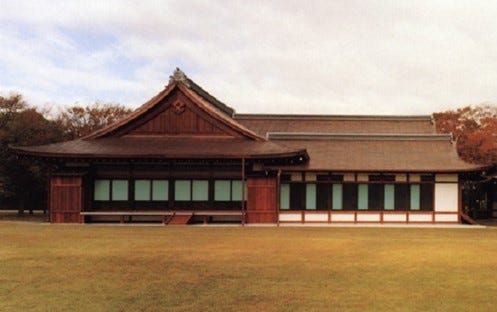
Kongo Gumi, founded 578
Financial: More than most other types of business, financial firms can show impressive longevity. Family ownership is a frequent feature with these also. For instance, The Foreign & Colonial Investment Trust was started “to give the investor of moderate means the same advantages as the large capitalists in diminishing the risk by spreading the investment over a number of stocks”. This is one of 34 investment trusts still trading today which have survived the past 80 years. (Black, 2017) The 34 surviving trusts may be old, but they are healthy. As of 2017, they accounted for 23% of all assets in the investment trust sector.
More examples of enduring family-controlled businesses can be found in the United Kingdom’s Tercentenarians Club – a UK trade association that only accepts as members firms over 300 years old and still owned by the same family that started it.
The organizational challenge facing biostasis is unusual because success must be measured over a century rather than a decade.
We should note that “family” can be expanded to meet business needs, especially (but not exclusively) in the Japanese examples. To keep the business in family over long periods of time, the company head legally adopts a suitable person to run his firm and then passes it on. Adult adoption is common in Japan. In 2011, more than 90 percent of the 81,000 individuals adopted in Japan were adults. When someone asks you to join their family and take over running their 1,000-year-old business, that is an offer you cannot refuse. Firms run by adopted heirs outperform biologically related heirs while both adopted and genetic heirs outperform nonfamily firms.
A family-dominated structure probably does not make sense for biostasis, at least at this point. The single example of KrioRus (a husband-and-wife company) is not encouraging. Partnerships might also be risky structures. What is needed is a corporate structure – non-profit in the case of long-term care – and an independent board of directors or trustees. Reasonable corporate forms (in the USA) potentially include C-corporations, S corporations, LLCs, cooperatives, and B corporations.
Religious (non-profit) organizations: You might expect religious institutions and organizations to endure over extended periods of time. Their core goal is not to make a profit (although they usually do) and their finances are often bolstered by required or almost-required donations or by direct government support. Not only are many religious institutions sheltered from economic vicissitudes, but their support is also strengthened by the perceived critical importance of the religion or institution. Just a few enduring institutions:
The Order of St. Benedict (founded in 529 AD, in Subiaco, Italy).
The Catholic Church (arguably dating from around 50 AD).
The Armenian Apostolic Church. The Kingdom of Armenia became the first state to declare Christianity as its official religion in 301 AD.
Saint Catherine’s in Egypt or, fully named, the Sacred Monastery of the God-Trodden Mount Sinai, was built between 548 and 565 and has remained in continuous operation through today. Its library contains books that date back to the 4th century.
Mar Sarkas is a monastery and convent in Syria built before 325 AD. The few English-speaking nuns will be happy to give you a tour.
Universities: Of the 85 institutions over 500 years old, 70 are universities. The champion is the University of Bologna, founded in 1088. The second oldest is the University of Oxford (1096, charter in 1248). In third place and the oldest university in the Hispanic world is the University of Salamanca, Spain, founded in 1134 (charter 1218). All told, 39 still-operating universities were founded before 1500.

The University of Bologna
The bottom line is that two factors stand out as being conducive to organizational longevity: Non-profit structures and/or family-owned companies. The first factor is easily adoptable to biostasis organizations. The second factor seems inappropriate although it may be possible to simulate this beneficial structure by binding executives and directors in various ways. But that intriguing possibility is beyond the scope of the current essay.
Seduction by Management Literature
To shape practices and structures for maximum organizational longevity, why not simply adopt the recommendations in management literature? There is no shortage of promising books, starting with the bestseller, In Search of Excellence by Thomas J. Peters and Robert H. Waterman. Jim Collins has built a career on writing books like this, including Built to Last: Successful Habits of Visionary Companies, Good to Great: Why Some Companies Make the Leap... and Others Don’t, and Great by Choice: Uncertainty, Chaos, and Luck—Why Some Thrive Despite Them All, by Jim Collins and Morten T. Hansen.
Built to Last, for instance, tells us that the longest-lasting and most resilient corporations engage in “clock-building” rather than relying on a charismatic leader; that they recognize the “genius of the ‘and’”; that they are “more than profits”; and that they “preserve the core, stimulate progress”. Collins advises us to have “big, hairy, audacious goals”, “experiment a lot and keep what works”; and use “home-grown management.” These may sound both plausible and impressive. They also come backed by copious amounts of research.
However, as Phil Rosenzweig argues in The Halo Effect, much business writing is what Richard Feynman called “cargo cult science”, having the superficial trappings of science but operating at the level of storytelling. Many of the principles still hold up today, partly because some of them are so broad as to appear applicable to virtually everyone. The principles, while perhaps inspiring, are vague. That leads to a framework that explains everything but predicts nothing. That suggests that the future depends on much more subtle issues than can be captured with coarse-grained principles abstracted from the past.
The Halo Effect explains nine “delusions” or mistakes of reasoning that undermine these formulas for business success. For example:
The Delusion of Connecting the Winning Dots: Looking only at successful companies and finding their common features, without comparing them against unsuccessful companies. Those features may be found just as often in failures. This is a common error in management literature.
The Delusion of Rigorous Research: Some writers can show off the sheer amount of research they have done, as if that had any bearing on the validity of the conclusions.
The Delusion of the Wrong End of the Stick: Getting cause and effect the wrong way around. Since many successful companies have a Corporate Social Responsibility policy, should we infer that CSR contributes to success, or that profitable companies have money to spend on CSR?
The Delusion of Organizational Physics: The idea that business performance is non-chaotically determined by discoverable factors, so that there are rules for success out there if only we can find them.
Similar criticisms are made by Daniel Kahneman in Thinking, Fast and Slow. Kahneman argues that Collins overstates the importance of good practices relative to sheer luck. Previously excellent companies may not change their practices and yet fall on their face as they undergo a typical regression to the mean. Others have pointed out how many of these built-to-last companies went downhill not long after Collins’ book was published. The bottom line is a rather pessimistic one: We cannot simply look at the most successful organizations and easily or reliably extract lessons to apply.
Having been critical of Built to Last, we can acknowledge that many of the principles it proclaims are plausible – if only because they are vague enough to encompass our own views of what works. For instance, Collins talks of “clock-building”. By this, he meant the companies that succeed over the long term are not built on a great idea or a charismatic, visionary leader. Instead, they succeed and endure because they build on strong foundations that carry them through the years and far beyond the active span of a generation of leaders. Biostasis organizations should keep working on their organizational design, recognizing the value of strong foundations. That leads me to the area of governance.
Governance
Board structure: The basic choice in the structure of a non-profit organization is whether to have a self-perpetuating board of directors or a board elected by members. In the former case, new board members are elected to that position by existing Board members.
The two leading US-based organizations have taken differing approaches. Alcor has a self-perpetuating board whereas Cryonics Institute (CI) has a member-elected board. In either case, the duties and authority of the board should be described in the Bylaws, Articles of Incorporation, and by applicable law. The board should seek to achieve the fundamental goals of the organization as described by the Mission Statement.
The self-perpetuating board has advantages and is probably the most common structure among non-profit organizations. Among the advantages:
Continuity of purpose and stability over a long period of time: New board members are selected by existing board members based on who can best preserve the organization’s core values and carry out its mission.
Consistency in expertise and knowledge: Existing board members are likely to select new members who have similar levels of expertise and commitment to the organization’s goals. This can help maintain a consistent level of knowledge and experience on the board. The downside is that misalignment can be irreversible.
Alignment: Members of self-perpetuating boards are often deeply aligned with the organization’s objectives and culture, which can lead to more cohesive and effective governance.
Efficiency: These boards may make decisions more efficiently, not having to be slowed or interrupted by member elections.
Less influence of external politics: Self-perpetuating boards can potentially reduce the influence of external politics or shifting member interests that might arise with elected boards, thus focusing more on the organization’s primary mission and long-term interests.
Control of board composition: Such boards can strategically plan their composition, ensuring a mix of skills and perspectives that align with the organization’s current and future needs.
Fundraising and resource mobilization: Board members in self-perpetuating boards are often selected for their ability to contribute resources, networks, or fundraising capabilities, which can be vital for the financial sustainability of the non-profit.
From my personal and lengthy experience with Alcor, a self-perpetuating board does not at all guarantee effectiveness or wise decision making, even though it does tend to preserve knowledge. Whether the problems result from the self-perpetuation or from a poor mix of skills is not clear.
On the other hand, member-elected boards of directors in non-profit organizations offer several benefits.
Representation: Member-elected boards allow the broader membership or stakeholder group to have a say in the governance of the organization. This can lead to a board that is more representative of the organization’s constituency.
Accountability: Elected board members are accountable to the members who elect them. This accountability can drive board members to be more responsive to the needs and concerns of the membership and to work towards the organization’s best interests.
Diversity of perspectives: Elections can bring in board members from a wide range of backgrounds, leading to a diversity of viewpoints and experiences. This diversity can enhance creativity, innovation, and the quality of decision-making. (But recent research points to costs of diversity in some cases.) This is not a guaranteed advantage of a member-elected board since it depends on who runs for election and on how a self-perpetuating board selects new directors. Currently, half of Alcor’s board consists of attorneys – an unbalanced composition that deprives the organization of skills in areas such as business management, and communication and marketing.
Adaptability: Regular elections allow for the periodic introduction of new members with fresh ideas and skills, which can help the organization adapt to changing circumstances and stay relevant.
Limit on power concentration: Elections serve as a check against the concentration of power in a small, self-selected group, potentially reducing the risk of groupthink or entrenchment of board members.
Community and member engagement: The process of nominating and electing board members can foster a sense of community and participation among members, strengthening their connection to the organization.
We should be careful not to lean toward member-elected boards on the basis that they are “more democratic.” Unlimited democracy can be dangerous, as the Founders of the United States recognized. One danger of a member-elected board is takeover by outsiders with very different ends – perhaps destroying the organization or else diverting it from its mission. That gets harder as an organization grows but biostasis organizations are still small. As an organization gets older and bigger, the bylaws can be further strengthened to tighten Board selection criteria.
Only a small fraction (15%) of CI members vote in their elections so it is a real danger, although how likely that is to happen is hard to say. The temptation for outsiders to attempt a takeover will grow along with the organization’s assets. But asset size presumably will grow with the number of members, making a takeover more difficult. Cryonics Institute sensibly limits this risk by restricting voting to lifetime members or members of at least three years standing who must also have made arrangements to be cryopreserved. This protection is limited, however, since a lifetime membership is not expensive.
Over the course of two decades, observing Alcor decision making from the inside and CI’s from the outside, I have come to think that any new biostasis organization should have a board that is split between member-elected and self-perpetuating. What the ideal proportions are remains an open question. A good approach may be a 7-person board where 4 directors are self-electing and the other 3 are elected by members. Or a 9-person board with a 5/4 split. With this structure, you improve the chances of getting useful input from people who are not semi-permanently on the board while maintaining protection against usurpation by outsiders. Add to this a requirement for 3 or 5 years as a member before being eligible.
A hybrid board structure for non-profit organizations, combining elements of both self-perpetuating and member-elected boards, can offer benefits by merging the strengths of each approach:
Balanced representation and expertise: A hybrid board can ensure that there is a balance between elected members who represent the broader stakeholder community and appointed members who bring specific skills, expertise, or resources. This can enhance the board’s overall effectiveness and diversity.
Stability with member engagement: The self-perpetuating element can provide continuity and stability in governance, while the elected portion ensures that the board remains connected to and accountable to the broader membership or community.
Flexibility in board composition: This model allows for strategic planning in board composition. It can be designed to ensure a mix of skills and perspectives that align with the organization’s current needs and future goals while maintaining input from members.
Increased legitimacy and trust: The inclusion of elected members can increase the organization’s legitimacy and the trust it enjoys from its members or constituents, as it reflects a commitment to inclusivity and representation.
Reduced risk of groupthink: The diverse origins of board members in a hybrid model can mitigate the risk of groupthink, fostering a culture of open discussion and diverse viewpoints.
Adaptability: A hybrid board can adapt more easily to changing circumstances. The elected component can bring in new perspectives and skills as needed, while the self-perpetuating members ensure continuity and institutional memory.
Efficient decision-making with accountability: The model can balance efficient decision-making, a characteristic of self-perpetuating boards, with the accountability seen in member-elected boards.
Member engagement and renewal: Regular elections for a portion of the board positions can maintain member engagement and facilitate periodic renewal of the board, bringing in fresh ideas and energy.
A hybrid board structure looks likely to be an effective model for biostasis organizations, at least those that offer member services, SST, and patient storage, either directly or through contractors. For an organization that focuses solely on patient storage and maintenance, it could be that a self-perpetuating board works better. Such an organization will not have members directly, being a service provider to a general biostasis service organization (BSO). Consider that many—and eventually most – of its “members” will be in biostasis and unable to participate.
Based on my experience in more than one non-profit, I was startled to learn that the average non-profit board has 17 directors. This seems far too large if the board is to operate effectively as a whole. Presumably, organizations with that many directors do not expect or want all directors to be actively involved in most decisions. At that board size, an Executive Committee is needed.
Internal leadership: Apart from the board, governance and succession management can be improved by having a large and active body of advisors. Alcor has such a group – although little utilized – and typically draws new directors from the advisors. The advisor group enables the board to see how advisors think and cooperate before considering them for a director position. Harvard University has a similar structure with a smaller board and the larger, 32-person Board of Overseers, from which directors may be acquired.
In the case of the Japanese shinise, we saw that these remarkably long-lived companies were run by the same family over generations – with a little help from adoption into the family. We see something similar in the longest-lived European corporations. Practices and processes that enable interested persons to get up to speed on organizational workings and strategies and that allow them to demonstrate their expertise, amount to something like bringing new individuals into the family. Another way of fostering something like a multi-generational family is to require that all directors and senior officers be members of the organization. This seems to be a common policy in the major biostasis organizations.
If patients are to entrust us with their futures, we must build organizations capable of surviving long enough to deliver on that promise.
As a non-profit grows it can make sense to create focused committees for areas such as nominating, fundraising, finance, personnel, legal, research, and operational improvement. These committees can include both directors and executives as well as voting or non-voting staff members.
Conclusion
The organizational challenge facing biostasis is unusual because success must be measured over a century rather than a decade. Technical excellence is essential, but institutional resilience is equally important. If we expect patients to entrust us with their futures, we must design organizations that are capable of surviving long enough to deliver on that promise.
References
“100-year-old Trusts that Still Make Top Returns: Golden oldies trump their rivals with up to 70% over three years.” Holly Black, The Daily Mail, December 15, 2017.
Built to Last: Successful Habits of Visionary Companies, by Jim Collins and Jerry I. Porras. Collins Business; 3rd edition, September 1, 2002.
Good to Great: Why Some Companies Make the Leap... and Others Don’t, by Jim C. Collins, HarperCollins October 16, 2001.
Great by Choice: Uncertainty, Chaos, and Luck—Why Some Thrive Despite Them All
Jim Collins and Morten T. Hansen, HarperBusiness Oct 11, 2011.
“The Armories of the Latter Day Laputas, Part 6”, by Mike Darwin, July 12, 2011.
Creative Destruction: Why Companies That Are Built to Last Underperform the Market—And How to Successfully Transform Them, chapter 1. Richard Foster, Sarah Kaplan. Broadway Business 2001.
The Living Company, by Arie de Geus. Harvard Business Review, March–April 1997. (Also in his book, 1997, 2002.)
Thinking, Fast and Slow, by Daniel Kahneman. Farrar, Straus and Giroux; 1st edition, April 2, 2013.
“Suspension Failures: Lessons from the Early Years”, by Michael Perry. https://alcor.org/Library/html/suspensionfailures.html
In Search of Excellence: Lessons from America’s Best-Run Companies, by Thomas J. Peters and Robert H. Waterman, Jr. HarperTrade, New York, NY, U.S.A. January 1, 1982
“Die Another Day: What Leaders Can Do About the Shrinking Life Expectancy of Corporations.” Martin Reeves and Lisanne Püschel
Boston Consulting Group, December 2, 2015
The Halo Effect: ... and the Eight Other Business Delusions That Deceive Managers, by Phil Rosenzweig. Free Press, February 6, 2007.
List of Oldest Companies. Wikipedia page, accessed June 27, 2020.